
 Family Run U.K. Business
 Over 85,000 U.K. Customers!
 Selling Hutches Since 2009
 Pay in 3 interest-free instalments!
Are You Planning To Keep Your Pet Rabbit or Guinea Pig Outdoors?
If so… then you need to read this.
If you are going to keep your rabbits or guinea pigs outside, it’s important to understand that foxes are a very real and ongoing threat to their safety.

Foxes are extremely cunning and effective predators and, despite popular belief, can strike at any time of the day or night.
They do not kill out of spite or because of some perverse “bloodlust”.
They are simply wild animals, hunting to feed themselves and their families, and are driven by instinct.
It’s surprisingly easy to underestimate just how determined and resourceful foxes can be when it comes to accessing a hutch or run.

Many loving pet owners assume that because their hutch or run is in the back garden, their pets will automatically be safe, but unfortunately, that isn’t always the case.
Your bunnies or piggies rely entirely on you for protection, and with a little preparation, you can greatly reduce the risks they face outdoors.
So, if you are going to keep your rabbit or guinea pig outdoors, I strongly encourage you to consider some of the following steps to safeguard their welfare.
7 Ways To Deter Foxes And Keep Your Pets Safe
There are a number of things you can do to greatly reduce the chances of a fox attacking and killing your rabbit or guinea pig.
“Prevention is better than cure", and by this I mean stopping foxes from getting anywhere near your pets in the first place.
Just the presence of a fox sniffing around a hutch or run and attempting to gain entry can be enough to kill a young bunny from shock.
The Clark family sadly lost their young Netherland Dwarf when it died of shock after a fox unsuccessfully tried to break into one of their hutches.
Sadly, situations like this do happen, but they are often preventable with the right precautions in place.
Deter foxes from your garden using repellents.
Scent repellents which target a fox’s keen sense of smell.
They typically work by mimicking odours that suggest another animal has claimed the territory.
A fox’s instinct to avoid confrontation will usually cause it to move on elsewhere.
This is a relatively cheap and reasonably effective way of keeping foxes out of your garden and away from your pets.
You do, however, need to be a little more hands-on, as scent deterrents must be reapplied fairly regularly to remain effective.
One of the most popular and best-selling scent-based deterrents in the UK is a product called Scoot.
Recommended by The Fox Project, it is quick and simple to use.
You simply dissolve one sachet of powder in water and spread it around your garden using a watering can.
Using sound deterrents to stop foxes.
Another effective option is to target a fox’s acute sense of hearing.
This requires an ultrasonic device that emits a very high-pitched burst of sound designed to scare foxes away.
The sound is inaudible to humans but can be very effective.
Each time a fox crosses the motion sensor, the device is triggered.
While these devices can be more expensive than scent deterrents, they can be very effective and, once installed, require minimal ongoing effort.
One well-known example is the RoamRover.

Designed to operate day and night, in all weather conditions, it is easy to set up.
The sound is inaudible to humans and has a detection range of around 10 metres.
By placing a few of these near your hutch or run, you effectively create an invisible and inaudible defensive perimeter.
Just remember to check the batteries from time to time.
If you combine sound deterrents with a scent repellent like Scoot, you can create a quick, effective and relatively inexpensive dual-sense deterrent.
There are also motion-activated devices that use a jet of water as a scare tactic.
According to Oxford Croquet Club, which experienced problems with foxes digging and fouling their green, a water-driven deterrent proved more effective than audio deterrents.
You may therefore want to consider this or a similar product, such as a jet spray repeller.
Build a fox-proof enclosure
One of the best options, and something I have done myself, is to build a large fox-proof enclosure.
It does not need to be a major or time-consuming construction project. My enclosure required one trip to B&Q and a few hours on a Saturday afternoon.

I have my coop and run set inside a corner of my vegetable patch, but the same principle can be applied to a rabbit hutch.
Two sides are formed by our boundary fence, with 6ft x 6ft trellis panels and 2 x 4 wooden posts completing the enclosure.
Around the base of the trellis, I attached heavy-duty chicken wire to prevent foxes from squeezing through gaps or anything from getting out.
It is also worth considering adding fence spikes to the top of fencing, particularly if a neighbour’s shed is nearby.
I have seen foxes gain access to gardens by climbing onto neighbouring sheds.
Another important point to remember is that foxes dig as well as climb.
To prevent this, any poultry wire or fencing should be buried at least 10–12 inches into the ground and then turned outwards by around 8 inches.
Ideally, rubble or old bricks should be placed on top of the turned-out wire before covering it with soil.
Always use good-quality, thick-gauge wire, as foxes are capable of chewing through thinner materials.

Fox-proof your garden
Research by The Fox Project’s director Trevor Williams, and former fox researcher Andy Wilson suggests that around 75% of fox earths in London are located under garden sheds.

Other common sites include bramble patches, building foundations and disused structures.
They also note that an adult fox can squeeze through a hole as small as 12cm (5 inches) in diameter.
If you keep animals outdoors, regularly check your garden for signs of fox activity.
Block up old foxholes and ensure foxes cannot gain access under sheds or decking.
Look out for well-worn paths or entry points and block them using chicken wire, rubble or other suitable materials.
Location. Location. Location.
Consider positioning your hutch closer to your house.
If you have a dog with an outdoor kennel, placing your hutch nearby may also help deter foxes, assuming your dog is not equally interested in your rabbits or guinea pigs.

If fox activity is particularly heavy, you may even wish to place your hutch inside a garage or large shed.
I also recommend placing hutches on paving slabs or fitting a wire skirt around the base to prevent rabbits from burrowing out or foxes from digging in.
Keep your hutch secure
Regularly check your hutch for signs of damage or weakness caused by chewing.
Some rabbits chew the framework of their hutch, which can weaken it enough for a fox to force entry.
Chewing is common behaviour and may indicate boredom, stress or frustration, so it should not be ignored.
Provide suitable alternatives such as apple or willow branches, untreated willow baskets, or purpose-made chew toys.
There are also repellent sprays available, although results can vary.
If chewing persists, you may need to fit hardwood or our popular and very effective Anti-Chew Strips over vulnerable areas to ensure the security of the hutch is not compromised.
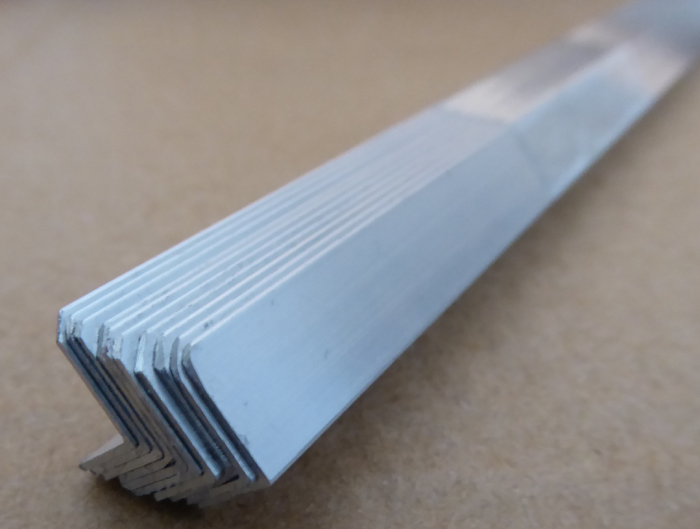
Foxes are persistent animals. Once they identify a potential food source, they are likely to return, so maintaining a strong, secure structure is essential.
Keep your hutch locked at all times
If foxes are active in your area, consider adding extra locks to wooden doors and padlocks to wire doors.

Ensure that any lift-up lids are secured when not in use, as foxes may attempt to push up on roofs to gain entry.
Take a moment each evening to double-check that all doors, gates and lids are properly closed and secured; those few extra seconds can make all the difference.
Invest in electric fencing
Electric fencing is by far the most effective way to keep rabbits and guinea pigs safe from foxes and offers the highest level of protection.
If foxes are a known issue in your area, this is my preferred and recommended solution.
Contrary to popular belief, electric fencing is neither cruel nor dangerous.
It delivers a short, sharp, harmless shock to the intruder’s nose, which acts as a powerful deterrent.
Studies show that a single shock is usually enough to create a long-term psychological barrier.
Once shocked, a fox is very unlikely to attempt to dig under or jump over the fence again, even if it could physically do so.
Conclusion
You may feel that foxes are not a problem in your area and that your rabbit or guinea pig will be safe.
However, many people who have lost pets likely thought the same.
Even if fox activity seems low where you live, putting sensible preventative measures in place gives real peace of mind and helps protect the animals that depend on you.
Keeping rabbits and guinea pigs can be hugely rewarding, but thoughtful preparation is key to keeping them safe and secure.
Have a question we didn’t answer?
If you still have a question and would like to speak with us, then just email:
We answer most emails within a few hours during working hours.
Pay in 3 interest-free instalments!
Over 85'000 U.K. Customers!
Family Run U.K. Business
Selling Hutches Since 2009