
 Family Run U.K. Business
 Over 85,000 U.K. Customers!
 Selling Hutches Since 2009
 Pay in 3 interest-free instalments!
How To Stop Your Rabbit From Chewing Their Hutch
Chewing in rabbits is a very natural habit.
This is not to say that every rabbit will chew their hutch, though. But a small minority of rabbits do.
And if you check the various online forums, or even Google it, you will see that some owners experience this problem from the start.
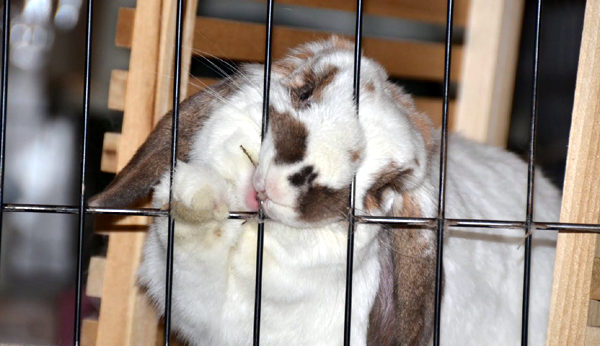
Understandably, it is frustrating and annoying, but the good news is that it is something that you should be able to control and prevent.
As an owner, the key is to step in early and take simple measures to reduce the chances of chewing becoming a long-term habit.
Failing to take action straight away can lead to an unwanted habit being formed, which can be harder to break.
If left unchecked it can lead to serious damage being done to your hutch in a very short space of time.
Here's why rabbits need to chew.
Unlike our teeth, rabbit teeth grow constantly throughout their life and, because of this, rabbits need to spend plenty of their time nibbling and chewing to wear their teeth down.
If they don’t wear them down naturally, then rabbits’ teeth grow too long and start to develop sharp spikes, which dig into their tongue and cheeks, causing painful mouth ulcers.
So rabbits are basically genetically programmed to chew.
5 reasons why a rabbit chews their hutch
Well, there are a few very common reasons why a rabbit may take to chewing at parts of their hutch.
Properly understanding this and then taking the appropriate action can help put an end to it.
The usual suspects for this unwanted behaviour are boredom and not enough enrichment in their enclosure, a lack of space, and not enough time spent socialising.
Age and hormones can also play a very big part.
The first steps to stopping your rabbit from chewing their hutch are to see how you can address these five areas first.
Could your rabbit be bored?
Are they being kept cooped up inside their hutch by themselves while you and the kids are at work or at school?
Rabbits are social animals. They like companionship. Being left alone in a hutch for most of the day can be a very lonely experience and may be why they are bored and frustrated.
So they turn to chewing parts of their hutch.
Consider a companion
Rabbits should always be kept in pairs or more.
If this is not practical (due to aggressive behaviour), then you need to ensure that they have plenty of interaction with you and your children.
Because your rabbit may simply want to be sociable.
If your rabbit is aware that you are at home and feels that it is not allowed to join you and might be missing out on fun or food, then it may keep testing the boundary of its enclosure to try to escape.
Forum quotes
“Even though my mini lop Rexy was loose all day, he still acted bored (a usual indication of boredom is when he starts destroying stuff).
So I took to playing with him intensely for 30–40 minutes at night before bed.
I'd chase him around the house, let him chase me, and wrestle with him. It wore him out enough so he would behave himself, and he looked forward to our play (he wasn't a biter).
I had another rabbit, CoCo, and even though she was spayed, she'd chew obsessively and throw her bowl around the cage.
She finally chilled out when I got her a harness and walked her around the neighbourhood.
Your rabbit might just be experiencing a little frustration – even if you are doing everything right.”
So spending more time with them may be all that is needed to put an end to their destructive behaviour.
Give them more space
Consider extending the size of their hutch by adding a run.
Many of our hutches have runs that are specifically designed to fit onto the front of their respective hutch.
Or you can invest in a standalone run and use connectors and tubes to join the two.
Is it a sign of frustration?
It's not uncommon for people to give their rabbits free rein during the day, whether in an outside enclosure or with access to the garden.
Come early evening, you put your rabbit back in their hutch, thinking that they'd had enough time to ‘play’.
However, what you need to bear in mind is that rabbits are most active during dusk, dawn, and overnight.
Just at the moment that they are keen to carry on exploring, they are being told to ‘go to bed’.
Like a small child, there might be a bit of playing up and frustration for a rabbit, and this could be expressed through unwanted chewing of the hutch bars or wooden framework.
Make their environment more stimulating
Try scattering and hiding their food around their hutch to encourage their natural foraging behaviour and to keep them busy.
Cardboard boxes left empty or filled with vegetables or hay are also a good option.
You could even close them up and give your bunnies the challenge of trying to get the food out.
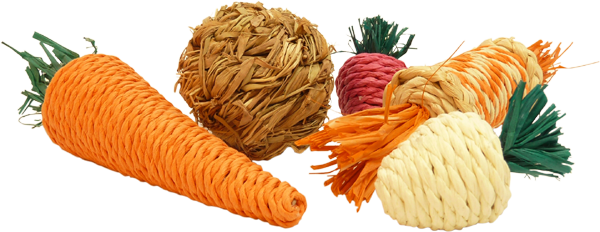
You can use sisal rope to hang chew toys and food from the hutch, or put some hay or vegetables stuffed inside a toilet roll for them to flip around and play with.
Rabbits are constantly looking for roughage to eat, as it is vital for their digestion to work well, and they will happily chew on wood or other soft materials we consider indigestible for the fibre it contains.
So, provide plenty of alternatives on which your rabbit can safely chew.
Things like branches from an apple or willow tree and a few chewable toys might also be worth considering.
The more alternative items to chew on, and the greater the variety, the better.
Make sure you are supplying plenty of hay as well.
It might be an age thing
Age and hormones can play a very big part in unwanted chewing.
As a general observation, young rabbits tend to chew more than older ones, females tend to chew more than males, and unneutered rabbits have a much higher tendency to chew than those that have been spayed or neutered.
All rabbits not used for breeding should be neutered.
It is a very common and reasonably simple procedure that usually costs between £70 and £150.
Taking preventative measures
At a minimum, providing a spacious hutch, plenty of run space, enrichment, toys, hay, and companionship gives your rabbit the best chance of avoiding destructive chewing habits.
But despite this, some rabbits just like to chew, and unfortunately, they don't have a concept of what is acceptable or unacceptable.
If that’s the case, it simply means a little extra management and prevention will be needed.
The most common starting point is bitter sprays
There are a variety of anti-chew sprays on the market, which work to varying degrees.
As a matter of course, we would recommend you get yourself a few brands and see which one works best.
Amazon stocks a range of sprays, or try your local pet shop or Pets at Home store.
Below are a few readily available brands:
A tip: looking at online reviews and feedback about the various sprays available, they seem to have around a 50% success rate.
Many rabbits don't mind the taste (and some even seem to like it), so while this may be worth a try, it is often not effective.
Try testing the anti-chew spray on items your rabbit already likes to chew.
That way, you don't end up spraying your entire hutch with a product your rabbit actually enjoys and turn your hutch into Hansel and Gretel’s proverbial gingerbread house.
If it does work with your rabbit, then the spray must be re-applied frequently.
You should apply the spray directly to the affected area and keep reapplying it regularly (every couple of days) so it doesn't lose its effectiveness.
If that doesn't work, then you could also try a cheap alternative, such as a watered-down vinegar spray or other homemade remedies and see if that does the trick.
How to train a rabbit
Another important technique, and something that is quite often overlooked, is behavioural training.
Every time you notice your bunny starting to chew at their hutch, try clapping your hands and loudly saying “No!” (no need to yell), and then give your rabbit an appropriate chew toy.
Most people report that it’s easy to make their bunnies understand them and, for some, disciplining them actually does work.
Just be mindful that they aren't actually begging for food and that each time you try to distract your rabbit with a treat, you are not unwittingly reinforcing the unwanted habit.
Some owners also use a light mist from a plant spray bottle as a gentle interruption, paired with a firm verbal cue.
Personally, we are not too fond of this method, so if you choose to try this, keep it mild and consistent. The aim is simply to break the moment of chewing, not to frighten your rabbit.
Another common technique is to use an empty jar filled with coins that you can shake as a warning.
Protect and prevent them from accessing the area
If you find that the sprays aren't working and you don't have the time for effective training and discipline, then the only other option is to provide some sort of barrier between your rabbit and the area it is intent on chewing.
A simple strip of new wood screwed, nailed, or even cable tied onto the area might be a quick and easy solution to the problem and help keep that part of your hutch intact.
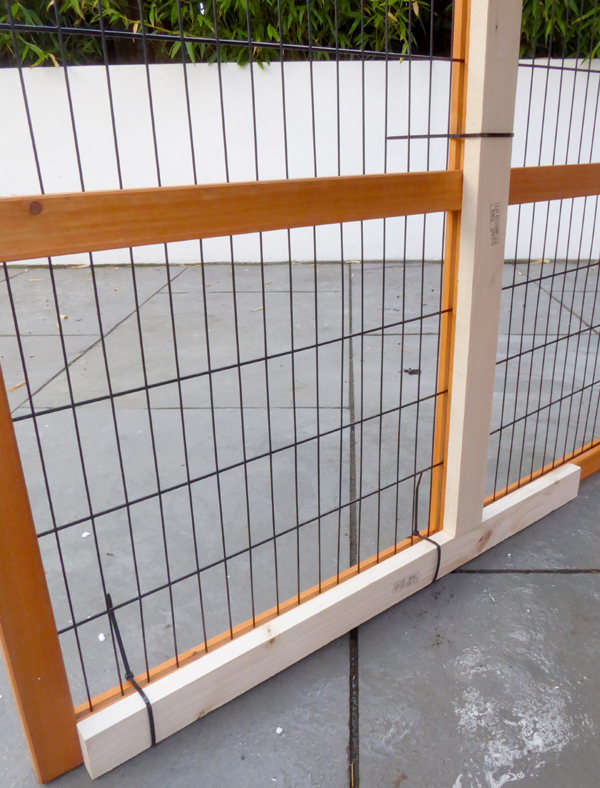
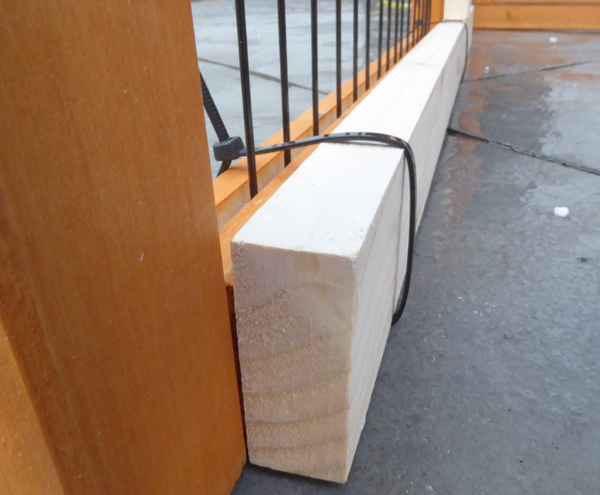
They can chew this instead, and you can simply replace the pieces as needed.
We've also heard of people glueing a piece of aluminium onto the chewed area or even wrapping metal wire around the area to prevent their bunnies from gaining access to it.
Providing some sort of preventative barrier, or one that they can chew on instead, is probably your best option if your rabbit seems intent on chewing at their hutch.
Thinking of buying a hutch?
The overwhelming majority of people keeping rabbits or guinea pigs are not going to have any issues with chewing.
But unfortunately, the fact remains that a very small minority of pet owners do experience this, and some rabbits will constantly chew at their hutch.
You may be one of those right now, looking at ways to stop your rabbit from chewing your hutch.
Hopefully, with a few of the suggestions listed above, you will be able to get the chewing under control.
Or you may be visiting our website for the first time, looking for a hutch.
Our rabbit and guinea pig hutches are made to a higher standard than most in our price range, and we are very proud of our range.
The constant feedback we receive from customers is that the quality surpasses expectations.
But no rabbit hutch available in the UK is 100% chew-proof.
It doesn't matter if it's made from wood or plastic.
So if your rabbit or guinea pig turns out to be one of those frustrating minorities that tend to chew, and they are simply given free rein to chew at parts of their hutch for an extended period of time, then inevitably they are going to cause damage to it.
We've made a host of suggestions and preventative measures to take immediately should they start their unwanted chewing.
If you put your rabbit’s welfare first and take practical steps early, most chewing issues can be managed successfully.
Rabbits and guinea pigs make loving and intelligent pets and can be a cheaper and better alternative for some than having a cat or dog.
Have a question we didn’t answer?
If you still have a question and would like to speak with us, then just email:
We answer most emails within a few hours during working hours.
Pay in 3 interest-free instalments!
Over 85'000 U.K. Customers!
Family Run U.K. Business
Selling Hutches Since 2009